

Summer Foraging: Free Eats
- Gabrielle DeRose
- Aug 15, 2024
- 3 min read

Updated: Oct 6, 2024
With each season comes new wild plants to search and gather. Whether it be for their beauty or simply to admire, wildflowers are among some of the most appreciated plants on the hot summer months. As I've learned and grown more over the years as a naturalist, I've become more adept at identifying and understanding the makeup of some of these plants. While I still stay away from wild mushrooms, leaving those to more professional and experience foragers, I am confident in my abilities to properly identify and source edible plants during summer. While some species on this list may seem commonsense, others are rather strange-looking and may surprise you with how delicious and safe to eat they are!
Wild "Mock" Strawberries

Commonplace in the earlier summer months, but still able to be found throughout the rest of the season, wild or "mock" strawberries are usually considered weeds. These tiny plants grow just about anywhere they please, but I've had the best luck finding them in open, sunny places like fields and at the edges of forests. Make sure to keep track of this species if you find one early in the season with their bright yellow flowers, as other animals like birds and chipmunks also find the scarlet berries rather tasty! You may have to beat the local fauna to these tiny treats, so keep an eye out! Something to consider, however, while looking for mock strawberries, is their location. Mock strawberries found in lawns and yards may be a bit riskier to gather, as many people treat their yards with harmful pesticides and other chemicals.
Wild Carrot / Queen Anne's Lace

This extremely common wildflower can be found just about anywhere in the summer, so there's not a big rush to get to these umbrella-shaped flowers like there is for the mock strawberry. All parts of the flower are edible, from the roots to the flowers. The clusters of white flowers can be eaten raw, but are also popular fried up. The seeds can be crushed up and used as a salad topper or spice, or otherwise brewed into an aromatic tea. The leaves can be minced and put into salads and soups, and, per its namesake, the roots carry a carrot-like taste that can be treated the same as the orange vegetable you buy at the store. When gathering wild carrot, look for the bristly, hairy stem. Similar in appearance to the poisonous hemlock, ensure you can identify this species properly before gathering any.
Staghorn Sumac
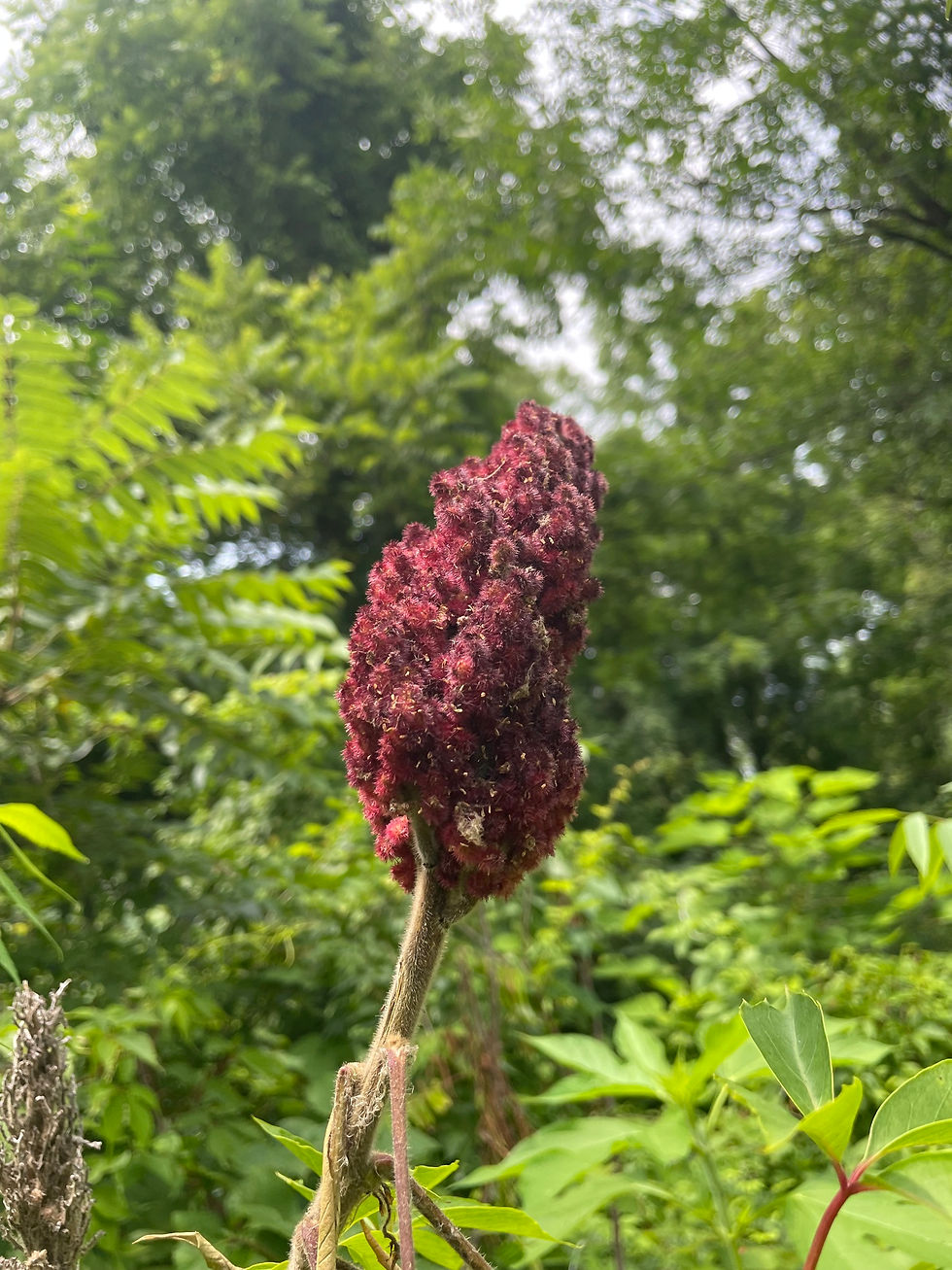
These dark red cones are easy to spot poking out from their tropical-looking trees! While there are various species of sumac, most of which are edible, this section will focus solely on the staghorn variation. Species with red, fuzzy berries are those that are most popular, with their sour flavor similar to that of a lemon. If you spot any white berries, make sure to steer clear, as these are the poisonous type! Staghorn sumac is easy to identify for beginners, with its strange red flowers and symmetrical leaves. While the berries are edible raw, most prefer them made into a lemonade or dehydrated and used as a spice.
Chicory

Any widely available and commonplace flower, these lilac-colored plants are edible from root to stem as well! A member of the dandelion family (another edible plant!), chicory leaves are usually used in salads with a vinaigrette or steamed as a spinach substitute. The roots are interesting for their coffee-like properties, and can be ground up and roasted as such. The flower buds can be plucked and pickled before they fully open, creating a caper of sorts, while the open blooms can be used in salads. With so many possibilities in one little flower, why not go out and collect some before the cold season shoos them away?
Allegheny Blackberry

These wild blackberries are easy to spot with their red and black berries, and can be used in a variety of recipes! While you can, of course, eat the berries raw (after a good wash), you can also cook them into pies or dry them out and add them to a trail mix. I've added them to muffins in the past and enjoyed the wild, tart flavor. The easiest way to tell these berries apart from other native blackberry species is by looking for the gland-tipped hairs cover the branches they grow from. Otherwise, keep an eye out for the broad leaves that grow in groups of five, with three larger leaves and two smaller.
As a beginner forager, I've found that these are some of the easier plants to properly and confidently identify. The next time you take to the trails, keep an eye out for one of these species, and consider taking a handful or two home to try out some recipes! Happy foraging!


Comments