

The Brown-Headed Cowbird: Homewreaker of the Bird World
- Gabrielle DeRose
- Feb 22, 2024
- 2 min read

Updated: Oct 6, 2024
Brown-headed cowbirds, Molothrus ater, are native to North America and can be found year-round in a majority of the fifty states- including here in southeast Michigan. This species of cowbird is a type of blackbird, and can commonly be found grazing for seeds in fields, meadows and lawns- and maybe even at your birdfeeder! At first glance, these birds appear to be fairly normal and unremarkable: what with their basic brown-black coloring and average size. However, these birds have a strange method of reproducing, and many people consider them to be "nuisance birds" as a result.

Female brown-headed cowbirds do not build nests at all. Instead, they lay their eggs in the nests of other birds. As such, female cowbirds do not raise their own young, and instead rely entirely on whoever's nest they hijacked to parent their offspring. Some female cowbirds will visit the nests they lay their eggs in (which can be multiple different nests of multiple different species!) to monitor their growth, but otherwise typically will not intervene.
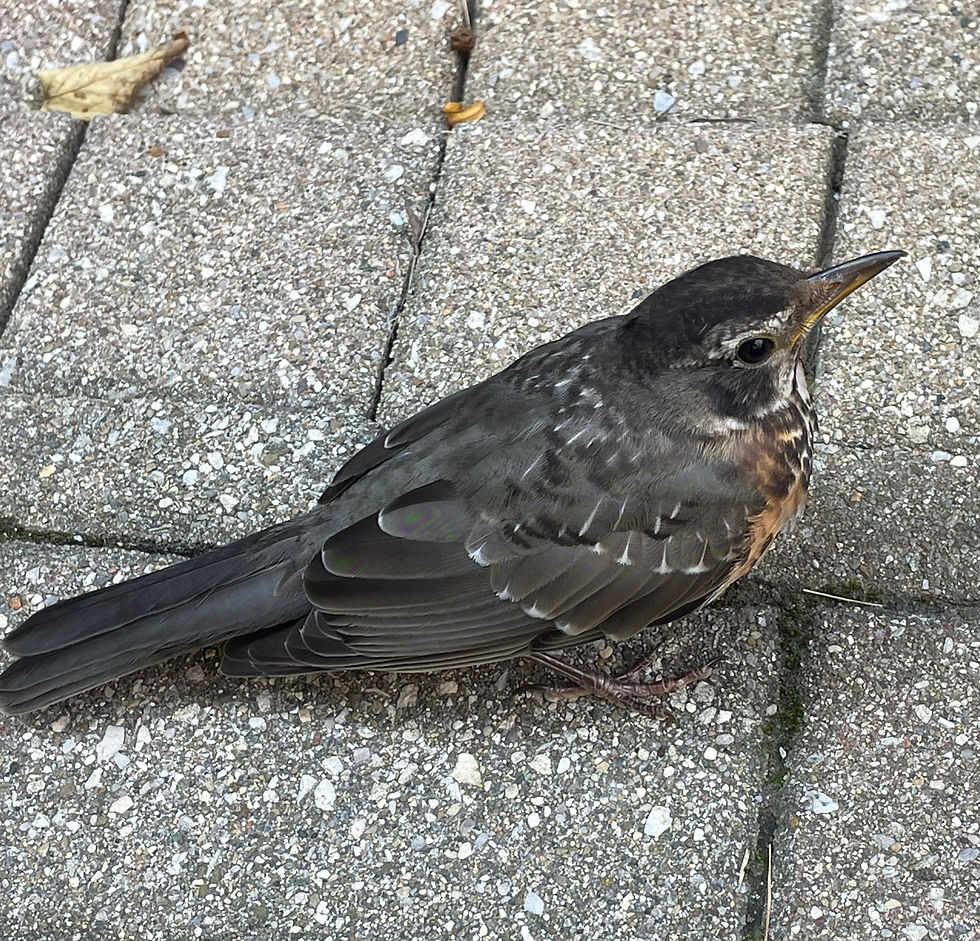
Birds aren't the smartest creatures in the animal kingdom, hence the insult "bird brain" coming into existence. As such, the "foster parents" to the cowbird eggs typically overlook the strange new appearance of a differently colored or differently sized egg. Even after the cowbird chick hatches alongside its foster siblings, rarely does the invader get ousted. Some species of smarter birds, like blue jays and American robins, have grown to spot the differences and remove the parasitic egg from their nests.
The cowbird chick is commonly confused with another brood parasite: the common cuckoo, Cuculus canorus. The common cuckoo is not native to the Americas, but their behaviors as bird homewreakers is similar to that of the brown-headed cowbird. While common cuckoos do also lay their eggs in the nests of other birds, their chicks, once hatched, will proceed to push out any other unhatched eggs in the nest as well as any other hatched chicks. Brown-cowbird chicks do not kill their foster siblings.
Brown-headed cowbirds leave the growth and survival of their eggs and chicks up to other bird parents perhaps due to the large amount of eggs the species lays. Unlike many other bird species, brown-headed cowbirds are not monogamous, and are known to mate with other members of their species. This is perhaps in part due to the fact that they do not build nests together like most other coupled birds.
Cowbird eggs typically hatch faster than the eggs of other bird species, which gives them an advantage when it comes to survival of the fittest. Parent birds will feed the biggest and healthiest of their young first, as these are the offspring most likely to survive. As such, the cowbird chick gets a head start on earning mom and dad's favor.
The cowbird has also been implicated in the decline of some endangered and threatened species due to their parasitic egg-laying behaviors. One of these is the black-capped vireo, which has since made its way off the endangered list but continues to be watched carefully for future decline.

Comments